
PROJECT OVERVIEW
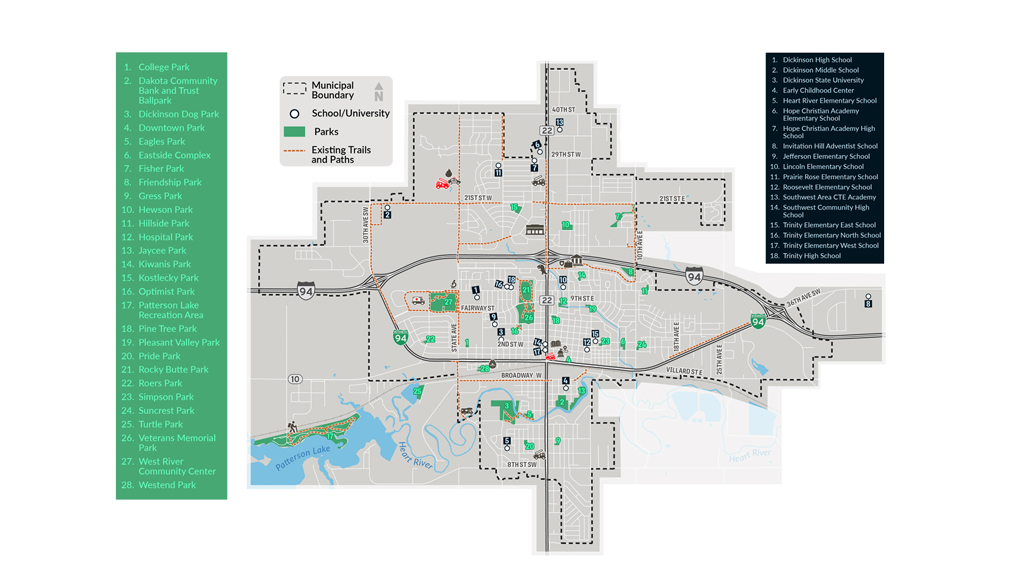
Following more than a decade of rapid growth tied to the oil and gas boom, the City of Dickinson faced a familiar but complex question: how to plan responsibly for the future after a 35% population increase, shifting economic conditions, and evolving community expectations. Existing plans no longer reflected realistic growth patterns or current infrastructure capacity. Direction 2050 — the City’s Comprehensive Plan and Transportation Master Plan — was developed to provide a clear, coordinated framework to guide land use, transportation, utilities, and public investment through the year 2050.
KLJ was hired by the City to rethink long-range planning for a small urban community, grounding decisions in real data while keeping residents and local context at the center of the process.
SOLUTION
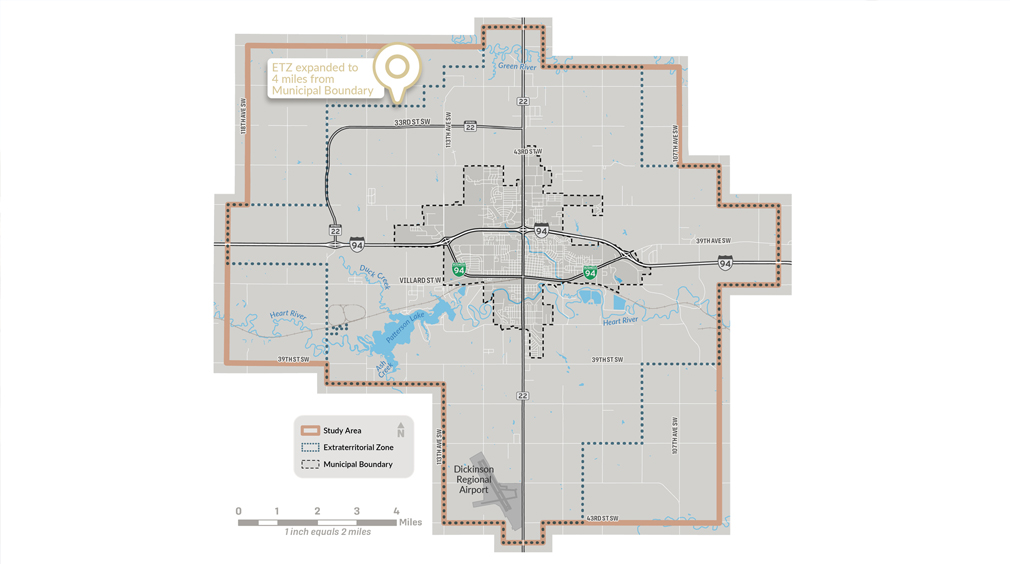
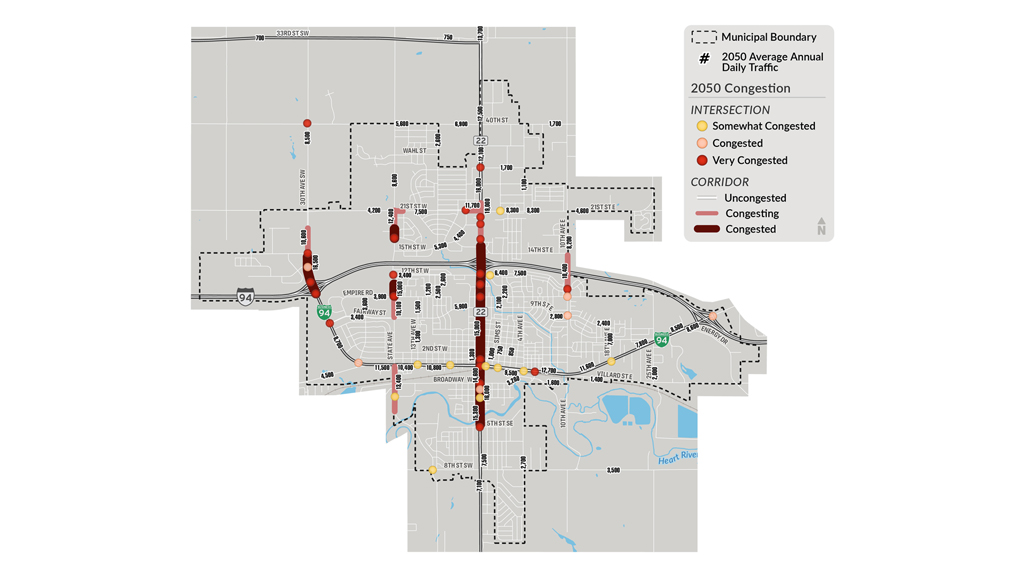
KLJ served as the prime consultant, leading project management, technical analysis, and public engagement while coordinating closely with City staff, the North Dakota Department of Transportation, and regional stakeholders. A defining element of Direction 2050 was the development of a citywide macroscopic transportation model using PTV VISTRO, an approach rarely applied at this scale. KLJ expanded the software beyond its typical intersection-level use to evaluate travel patterns across all collector and arterial roadways within Dickinson and its extraterritorial area.
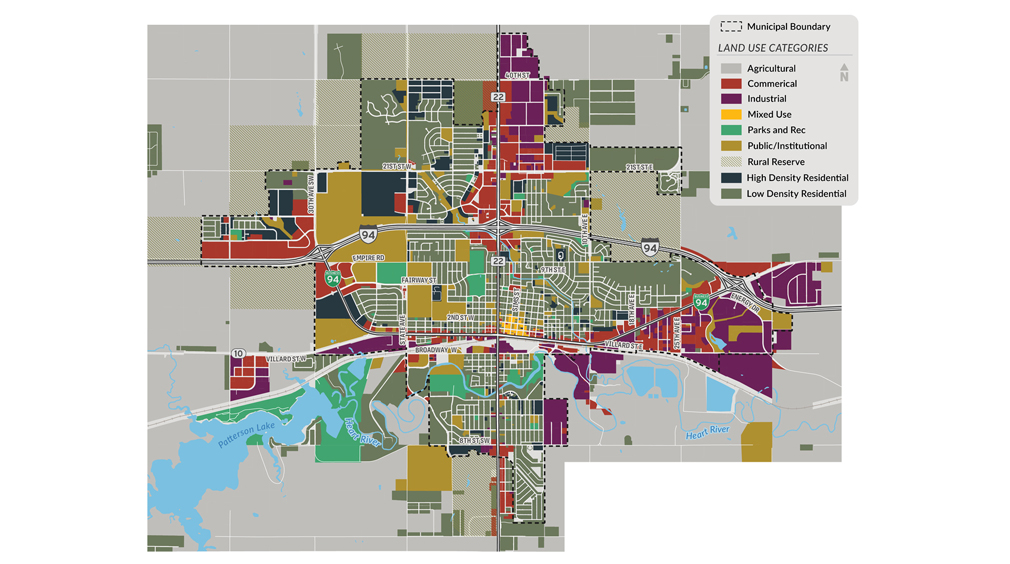
The model integrated StreetLight Origin–Destination data, seasonal traffic adjustments, and Institute of Transportation Engineers trip-generation rates to reflect how people actually move through the city today and how future land use scenarios could change those patterns. This technical foundation supported ten coordinated planning tasks, including realistic growth projections, travel demand modeling, infrastructure and housing strategies, a future land use plan, and a phased transportation network.
Public engagement was embedded throughout the process. KLJ used interactive meetings, online tools, and clear visualizations to translate complex data into accessible information, allowing residents and decision-makers to see how development choices affect congestion, safety, and quality of life.
SERVICES PROVIDED
• Comprehensive and transportation master planning
• Citywide travel demand and traffic modeling
• Public and stakeholder engagement
• Future land use planning
• Capital improvement planning support
• Transportation network and multimodal analysis
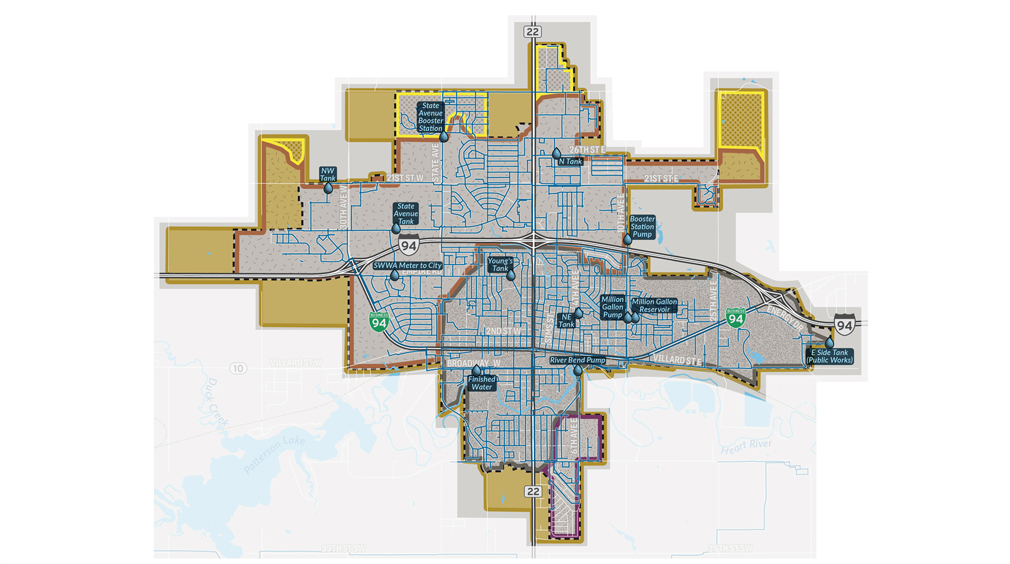
• Coordination with utility and infrastructure modeling
results
Direction 2050 delivered more than a planning document. The final plan provides Dickinson with a living, maintainable framework that aligns land use, transportation, and infrastructure investments with community goals. City staff can now test development scenarios, prioritize projects using measurable performance data, and phase improvements to match actual demand.
The plan supports fiscally responsible growth by identifying where infrastructure capacity already exists, reducing unnecessary expansion and long-term maintenance costs. It also advances safety, multimodal connectivity, and neighborhood access, reinforcing quality of life as Dickinson continues to evolve. Completed in 2025, Direction 2050 positions the City to make informed, transparent decisions that balance growth, resilience, and community values for decades to come.
ACEC North Dakota Winner Category A: Studies, Research and Consulting Engineering
