
Introduce a Girl to Engineering Day with Mahbuba Khan
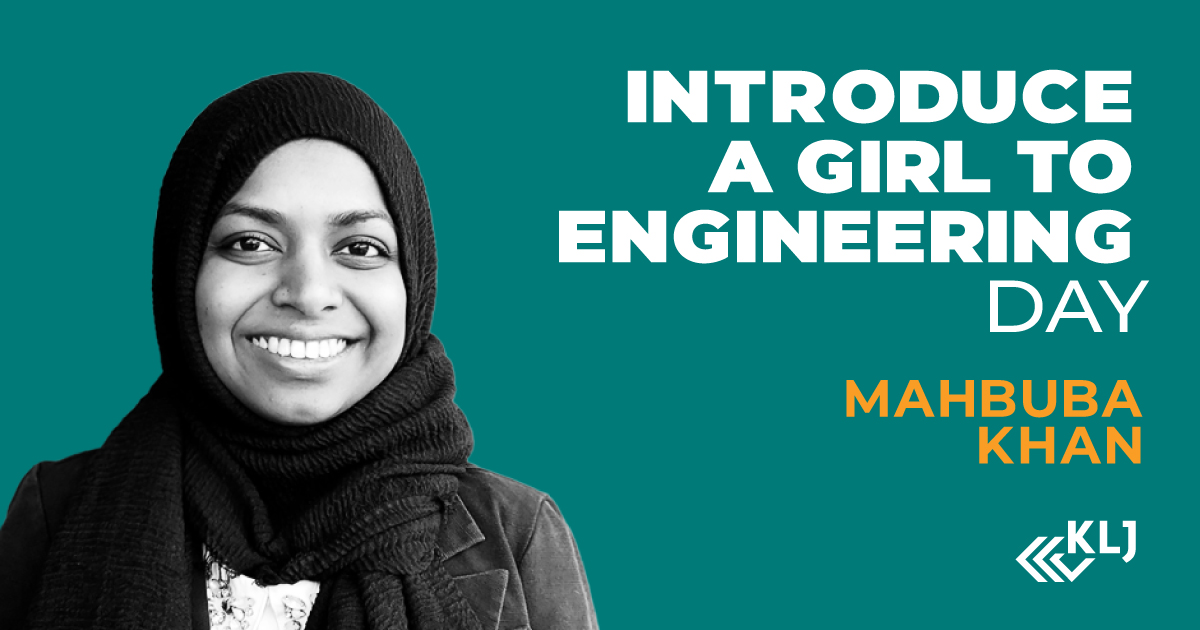
On Introduce a Girl to Engineering Day, we often talk about innovation, infrastructure, and impact. But behind every roadway, every intersection, and every commute is a person who once sat in a classroom wondering what to do with her curiosity.
For Mahbuba Khan, Roadway Civil Engineer, engineering was not sparked by a single dramatic moment. It grew steadily, shaped by science, encouragement, and a desire to help others. We asked her to share her story with us! Here’s what she had to say.
Q: What first sparked your interest in engineering? Was there a specific moment when you knew?
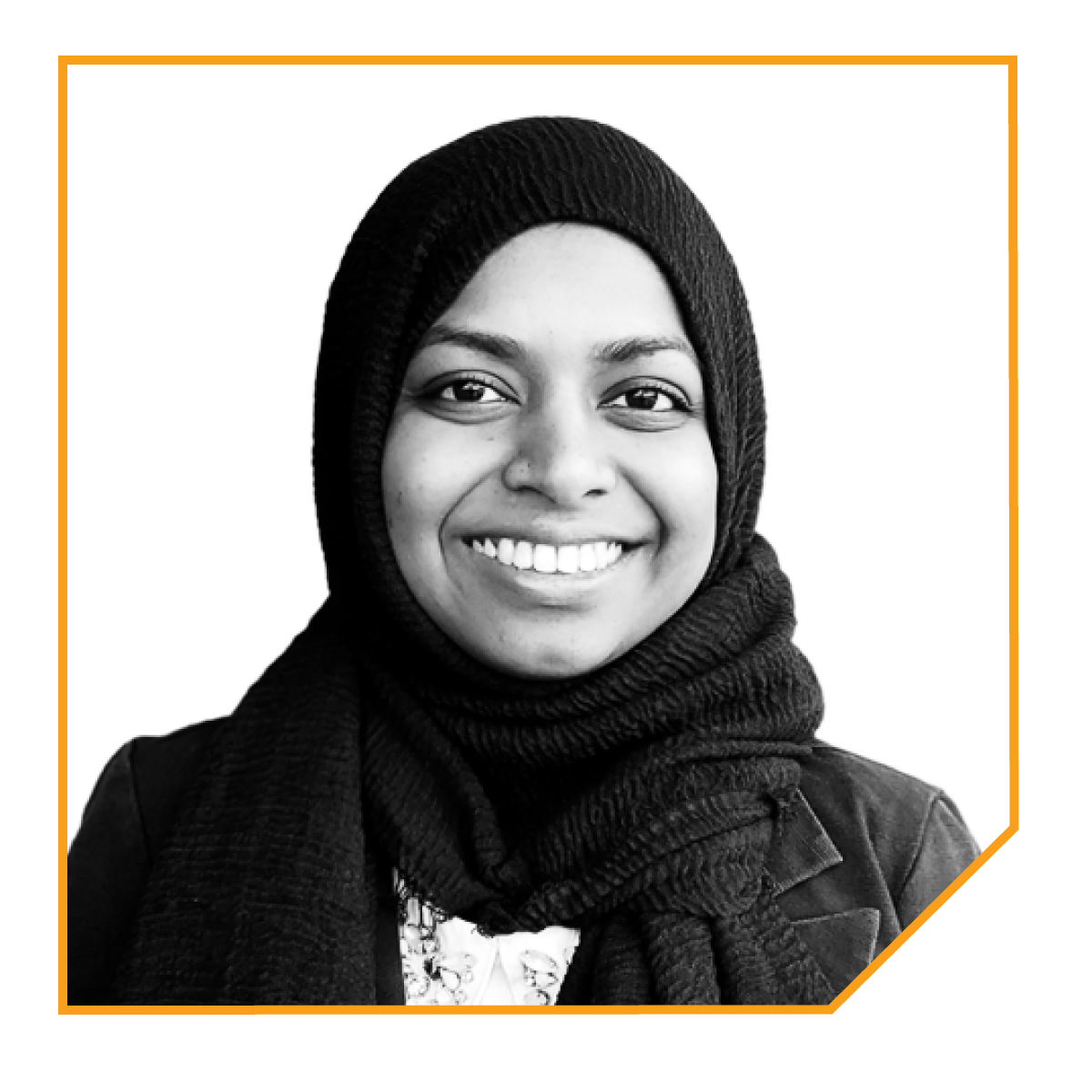 A: There wasn’t one defining moment. It was more like one curiosity leading to another. I’ve been interested in science since elementary school. As I continued into a science major, I realized I wanted something more applied than theoretical work. That’s what led me to engineering.
My dad always encouraged me to choose a career that helps others. That influenced me more than I realized at the time. Choosing civil engineering, and eventually transportation, felt like a way to make a real impact. Through my work, I contribute to safer roads and support my community in a meaningful way.
Q: What subjects did you enjoy most in school, and how do they connect to what you do now?
A: I always liked science. In high school, physics and geometry stood out to me. Physics teaches you how materials behave and how fluids move. That’s critical in civil engineering, especially when designing roads that need to handle rain, drainage, snow, and long-term wear.
Geometry was fun because it was visual. I enjoyed solving problems using shapes and spatial reasoning. Now, as a roadway designer, I use those same concepts every day. Points, lines, areas, and three-dimensional shapes are part of my daily work. A lot of the calculations I perform are grounded in the geometry I learned years ago.
Q: What is your favorite part of being an engineer?
A: It might sound simple, but I enjoy sketching and drawing. As a roadway engineer, I spend a lot of time creating geometric designs in professional software. It’s not drawing a portrait of a person, but it feels like creating a roadway portrait from different angles. Another favorite part is seeing a project completed. It’s rewarding to say, “I helped design that road.” Watching people use something you helped create every day is a great feeling.
Q: Can you share a project that felt especially meaningful?
A: I’ve worked on several roundabout projects over the past five years, and those are always exciting for me. With my background in transportation safety, I’ve analyzed real crash data at intersections involving vehicles, pedestrians, and bicycles. It can be shocking to see how many injuries and fatalities could be prevented with better design.
Research shows that replacing traditional intersections with carefully designed roundabouts can significantly reduce severe crashes. Knowing that my work directly contributes to safer roads makes those projects incredibly meaningful.
I also enjoy multimodal or complete roadway projects. Designing roads that support different modes of transportation and are accessible to everyone helps create safer, more connected communities. Projects like that keep me motivated.
Q: What do you wish you had known about engineering when you were younger?
A: I wish I had understood how broad engineering really is. When you’re young, it can seem like engineering fits into just a few categories and is heavily focused on math. In reality, there are countless branches and multidisciplinary areas. I also wish I had seen more women in engineering. Representation matters. Even today, the percentage of female engineers is relatively small. Seeing more women in the field would have made starting the journey feel less intimidating.
Q: How would you describe engineering to someone who thinks it’s only about math?
A: Engineering, especially in civil and transportation, is not just math. Math is one of the tools we use, but it’s not the entire job.
Engineering is about solving real-world problems in smart, practical ways. We use math to support our ideas, but a lot of complex calculations are handled by software. There are also areas within civil engineering and related fields like transportation planning that focus more on data analysis and strategy than advanced math. At its core, engineering is about creativity, problem-solving, and making systems work better for people.
Mahbuba’s story reflects what Introduce a Girl to Engineering Day is truly about. Engineering is not just equations on a board. It is curiosity turned into action. It is creativity supported by science. It is a commitment to designing safer, stronger communities.
For every girl who enjoys asking how things work, solving puzzles, or drawing shapes in the margins of her notebook, there is a place in engineering. Sometimes, it begins exactly the way it did for Mahbuba, with one curiosity leading to another. Learn more about the industry and our services at www.KLJeng.com!
