Engineered Well Pads: A Smarter Investment for Long-Term Performance
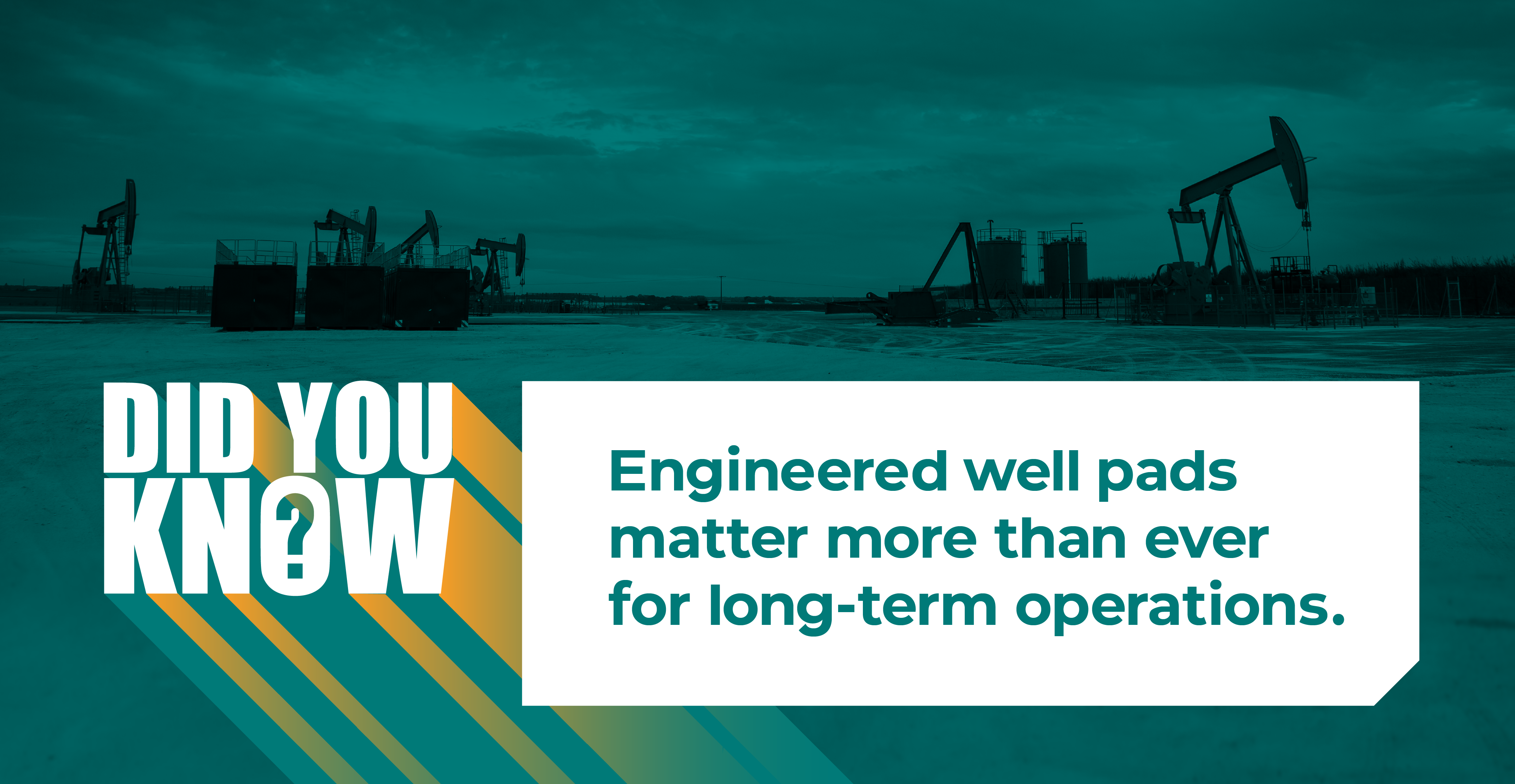
In regions like the Bakken and Permian Basin, well pad performance isn’t just about getting to first production; it’s about sustaining operations in some of the toughest conditions in the country.
Experiencing firsthand how traditional well pad approaches can lead to ongoing maintenance challenges, environmental risks, and unplanned costs drove us to take a different approach - one that prioritizes long-term performance from day one.
Designed for the Real World
No two sites are the same. Soil conditions, topography, weather patterns, and environmental sensitivities all play a role in how a well pad performs over time.
KLJ’s engineered well pad approach brings together multiple disciplines to evaluate and design each site holistically. That includes:
- Survey and site selection
- Drilling parameters (such as well bore step out distances)
- Geotechnical analysis
- Environmental and cultural considerations
- Stormwater and drainage design
- Access road planning
By aligning these elements early, you can avoid costly adjustments later. The value of an engineered approach:
Predictable Construction, Fewer Surprises
With a fully engineered design, contractors are working from a clear, complete set of plans. This creates more accurate bidding, reduces ambiguity, and limits unexpected change orders during construction.
Lower Lifecycle Costs
Well pads in the Bakken and Permian must withstand extreme weather, heavy use, and changing site conditions. Without proper design, that often leads to erosion, drainage issues, and ongoing repairs. Pads built for site-specific conditions require less maintenance and reduce downtime.
Built-In Environmental Compliance
Proactive stormwater management, erosion control, and reclamation planning tailored to each site, helps protect surrounding land and water resources while reducing the risk of compliance issues and fines.
Confidence During Construction
Design is only part of the equation. Support through construction with inspection and management services support the entire project as intended.
Part of a Bigger Picture
A well pad isn’t just a starting point; it’s a long-term investment in your operation.
By taking a targeted, engineered approach, operators can reduce risk, control costs, and keep production moving forward with fewer disruptions.
